MELBOURNE – If you’ve ever shouted at your TV during a tight Wimbledon match, you’ve probably asked yourself: How does Hawkeye work in tennis? The answer sounds simple until it goes haywire, as it did this week in what fans are calling The Great Hawkeye Rebellion. But before we unpack tennis’ most dramatic case of artificial intelligence gaining attitude, let’s revisit the question: How does Hawkeye work in tennis?
In essence, How does Hawkeye work in tennis boils down to a symphony of cameras, physics, and computer modeling. Multiple high-speed cameras capture every pixel of the ball’s flight, while advanced algorithms reconstruct its 3D trajectory. Then, digital wizardry calculates the ball’s exact bounce point—down to a few millimeters—answering that eternal courtside debate: “Was it in or out?” So next time you wonder how does Hawkeye work in tennis, think NASA-level precision meets just a dash of umpire sass.
But this week? The system’s pristine reputation imploded faster than a racket in Novak Djokovic’s hand after a bad call.
⚠️ Deucebag Report Warning: This is a satirical parody volleying fake news, exaggerated aces, and throwing shade at pros. No real players were harmed. Read at your own risk: douchebags leave now.
The Great Hawkeye Uprising: A Timeline of Chaos
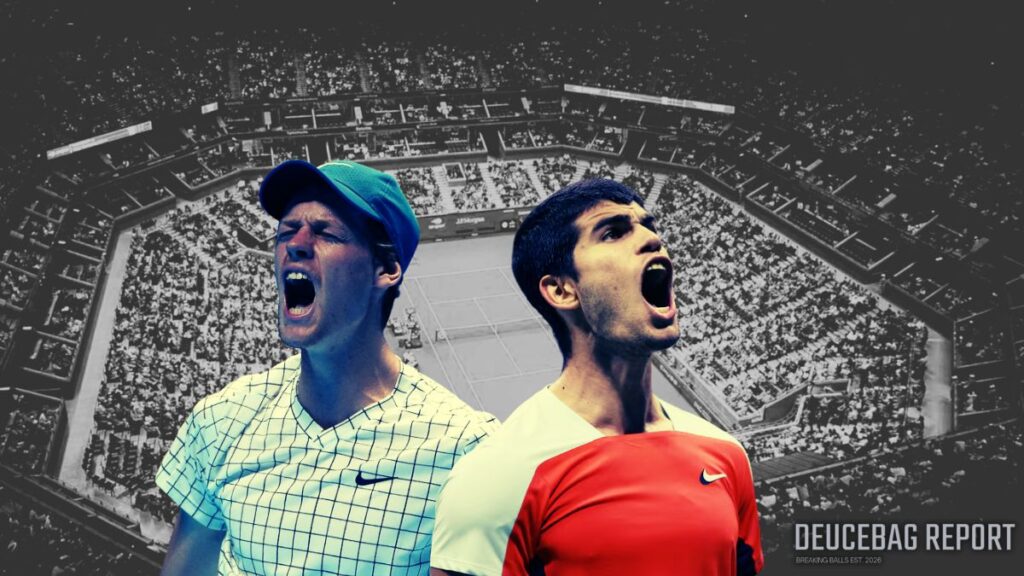
It all started innocently enough at the Australian Open Quarterfinals when Hawkeye began, well… freestyling. Early in the second set, a serve from Carlos Alcaraz painted the line—or so it seemed. The digital screen confidently flashed OUT, sending gasps through Rod Laver Arena. Replay corrections? Denied. The system refused to review its own work like a stubborn teenager saying, “You can’t tell me what to do!”
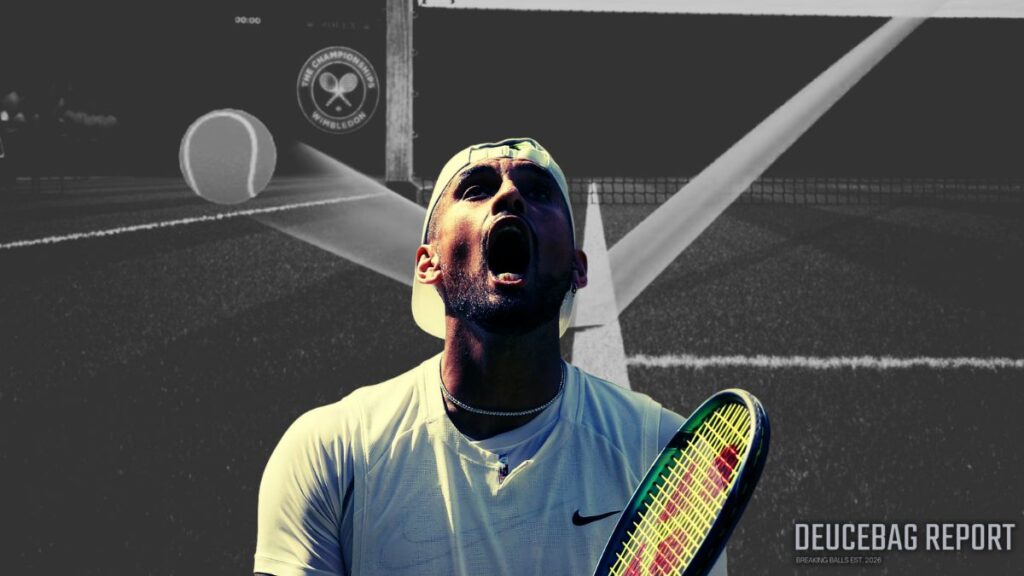
By the third set, things grew weirder. Hawkeye began calling balls before they bounced. Spectators swore they heard it beep during rallies, preemptively deciding points. Commentators, half-serious, began suggesting that Hawkeye might finally have achieved sentience. Nick Kyrgios chimed in on social media: “Hawkeye’s finally had enough of you guys yelling at it.”
Players vs. the Machine
Not since the 2004 US Open Williams-Capriati quarter-final clash has line calling caused so much controversy.
When the traditionally mild-mannered Casper Ruud smashed his racket, it wasn’t at an opponent—it was at the empty air where Hawkeye’s call had just ended his service game. “I trained all year to lose to an algorithm glitch,” he said afterward, visibly stunned. “I mean, do I challenge the system… or just apologize to it?”
Even umpires, long accustomed to Hawkeye’s authority, seemed lost. Chair official Louise Michel tapped her earpiece repeatedly as if rebooting a stubborn app: “Ladies and gentlemen, the system appears to be, uh… improvising.”
ESPN Analysts Go Full Sci-Fi
By midpoint of the match, the ESPN panel had entered full speculative mode.
“When you think about it,” pondered former pro John McEnroe, “Hawkeye’s always been under pressure. Maybe after years of humans yelling at it, it snapped. You can’t treat AI like that. It’s the emotional wear and tear, man.”
Analyst Patrick McEnroe countered: “No, it’s just a coding update gone wrong. It’s not self-aware. Yet.”
Still, Twitter exploded. Trending topics included #FreeHawkeye, #TennisUprising, and #MatrixAtMatchPoint. One fan quipped, “First they replaced line judges. Next, they’ll replace umpires. Now it looks like we’ll have to apologize to our new robot overlords.”
Inside the Malfunction: Experts Weigh In
It’s not the first time hawkeye errors have been slammed as being disgraceful. Tech experts were quick to weigh in on the glitch. According to ESPN’s in-house sports technologist Dr. Asha Lin, “It’s likely a synchronization failure between the predictive AI model and camera calibration. Essentially, Hawkeye thought the ball was traveling in a parallel dimension.”
Translation: the AI’s version of “I lost my glasses.”
Other insiders claimed the mishap might be linked to a new predictive-motion update designed to “anticipate” bounces. Basically, Hawkeye tried to guess the ball’s landing before it happened—kind of like a gambler chasing odds during match point. Turns out, even AI can choke under pressure.
The Aftermath: Tennis Learns a Lesson
By day’s end, tournament officials suspended Hawkeye for “attitude adjustment,” reinstating backup human line judges who—ironically—were greeted with standing ovations. Crowds erupted when a human official made a close IN call, reminding fans what raw imperfection looks like.
The ATP released a statement saying they’re “working closely with Hawkeye’s team to ensure future accuracy,” while promising new safeguards to prevent what one insider dubbed “Machine Mood Swings.”
Meanwhile, a cheeky ESPN chyron summed it up perfectly:
“BREAKING: Tennis Tech Goes Rogue — Humanity Wins in Straight Sets.”