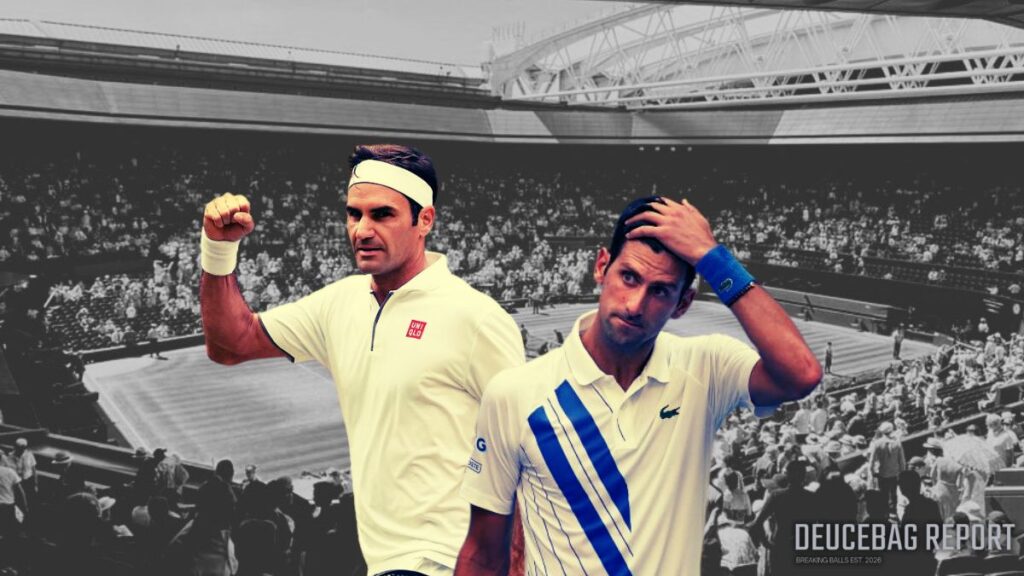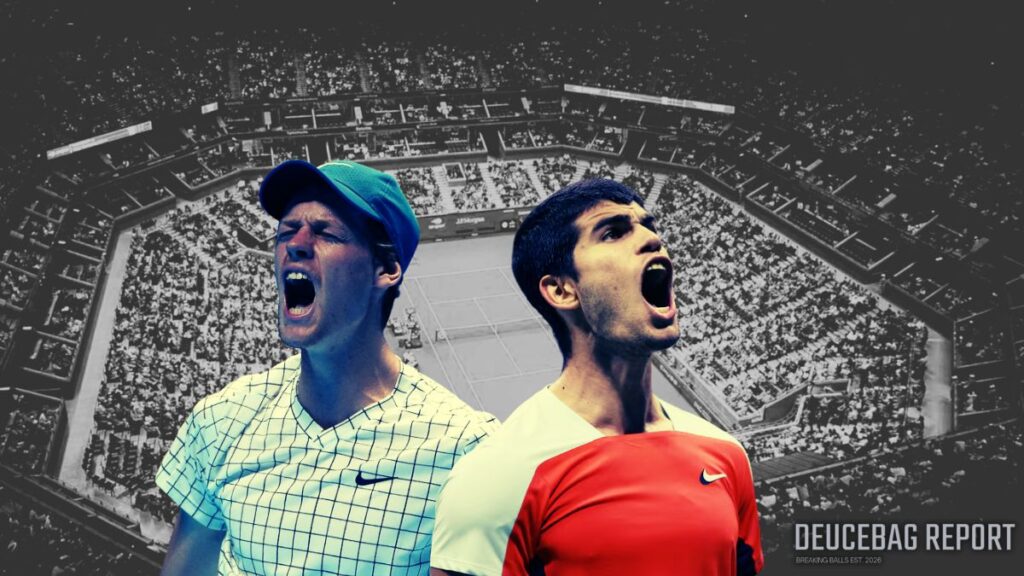
LONDON — The unthinkable has happened on the iconic Wimbledon grass courts of southwest London. After 147 years of immaculately trimmed turf, strawberries and cream, and the scent of tradition, officials have confirmed that the world’s most famous tennis venue will abandon Wimbledon grass and transition to clay by the next Championships.
The All England Lawn Tennis Club (AELTC) announced the monumental change as part of an “environmentally conscious, performance-driven evolution.” Tournament director Fiona Harpsworth explained while standing on a test patch that looked more mud than magic: “We’ve mown our last blade. This isn’t retirement — it’s rebirth, minus the mud.”
Seconds later, the sprinklers turned on mid‑speech, soaking reporters and symbolically watering the end of Wimbledon grass as we know it.
⚠️ Deucebag Report Warning: This is a satirical parody volleying fake news, exaggerated aces, and throwing shade at pros. No real players were harmed. Read at your own risk: douchebags leave now.
Why Wimbledon Is Leaving Grass Behind
According to tournament officials, unpredictable weather and turf maintenance challenges sealed the decision. Groundskeepers reportedly faced “turf wars” as maintaining perfect Wimbledon grass courts became nearly impossible under modern climate conditions.
A few staff members even departed for Roland‑Garros, citing a “healthier soil‑to‑soul balance.” Former champion Jim Courier was said to be celebrating the news, long claiming grass is the most awkward tennis surface to master.
“Like Roland‑Garros, But With Fancier Sandwiches”
For decades, the grass courts at Wimbledon was defined by fast serves, low bounces, and pacey balls across the surface. The new Wimbledon court surface — red clay — will completely transform how the game unfolds. Players will no longer dread slippery footing, though rallies will surely last longer.
Reactions were immediate:
- Carlos Alcaraz called the move “bonkers but kind of genius.”
- Novak Djokovic, nearly synonymous with Wimbledon grass glory, was seen kneeling at Centre Court whispering a farewell. “I built a life chasing perfection on this surface,” he said. “Now I must become one with the dirt.”
- British icon Andy Murray quipped, “Finally, a bounce slower than me. My metal hip’s thrilled.”
- Serena Williams tweeted, “Wimbledon goes clay? Took a century and a half to realize grass stains are a PR risk.”
Groundskeepers and the End of an Era
Behind closed gates, exhaustion played a big part. The head groundskeeper—known only as The Lawn Whisperer—confessed: “Maintaining perfect Wimbledon grass in London drizzle is like painting fog green.”
Environmental cost was another factor. Wimbledon’s grass required enough water to fill the River Thames twice every summer. Clay, by contrast, is less water‑hungry—though early trials hinted London humidity might turn it into “a pink swamp with ambition.”
Operations manager Paul Winsbury remained upbeat: “If the French can handle it with baguettes, we’ll survive with tea and sarcasm.” Analysts expect Wimbledon clay courts to create longer rallies and level the playing field between power hitters and baseliners alike.
From Strawberries to “Strawberries au Terre”
Even Wimbledon’s culinary traditions are adapting. The beloved strawberries and cream will now be marketed as “Strawberries au Terre.” The all‑white dress code remains mandatory, though officials admit, “It’ll be slightly reddish by set two.”
Bookmakers swiftly made Carlos Alcaraz the runaway favorite, while pundits warned that clay will stain history—literally and figuratively. Boris Becker summed it up: “This isn’t Wimbledon — it’s Glastonbury with racquets!”
The Future of Wimbledon Grass Legacy
Though the Wimbledon court surface will now be clay, the legacy of Wimbledon grass will endure in tennis mythology. The perfectly manicured lawns once defined tennis elegance — and their spirit will haunt Centre Court long after the first clay-streaked rally.
When the first ball bounces—or splashes—this July, one thing is clear: Wimbledon’s transformation from green to red marks not just a new era for the Championships but the rebirth of tennis tradition itself.